Antibodies (Immunoglobulins)
Definition
Antibodies (immunoglobulins, Ig) are glycoproteins produced by plasma cells in response to antigen exposure.
They bind specifically to antigens to neutralise or eliminate pathogens (bacteria, viruses, toxins, parasites).
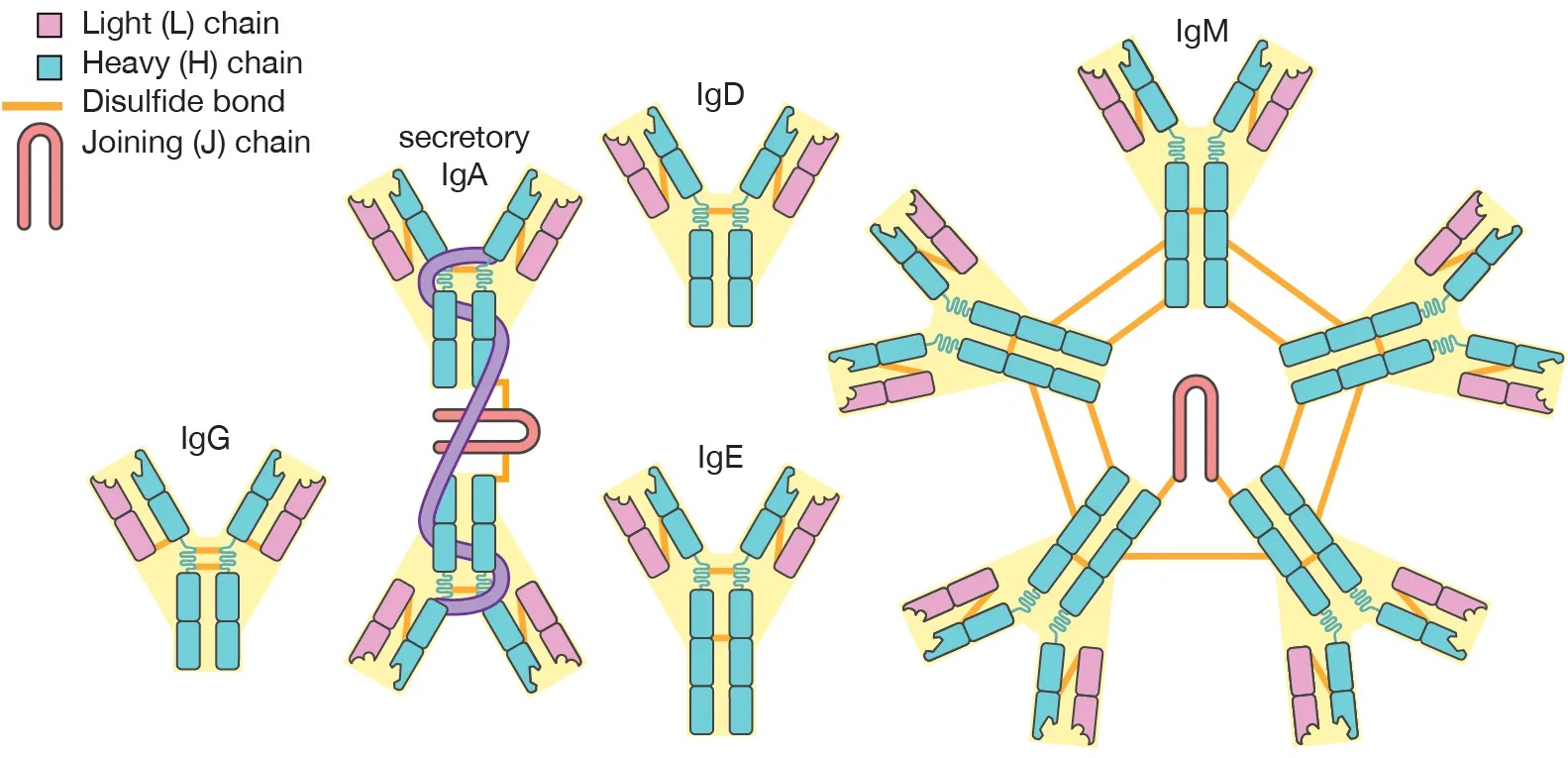
Classes of Immunoglobulins (Mnemonic: GAMED)
|
Type |
Main Location / Features |
Primary Functions |
|
IgA |
Mucosal secretions: saliva, tears, respiratory, gastrointestinal and genitourinary secretions; breast milk |
• Mucosal immunity – prevents microbial adherence to epithelium • Protects respiratory, GI and GU tracts |
|
IgD |
Surface of immature B cells (B-cell receptor) |
• Initiates B-cell activation • Regulates immune response |
|
IgE |
Bound to mast cells and basophils in skin, lungs and mucosa; very low serum levels |
• Defence against helminthic parasites • Mediates Type I hypersensitivity (e.g. anaphylaxis, asthma, urticaria) |
|
IgG |
Most abundant (~70–75% of serum Ig); plasma and extracellular fluid |
• Long-term immunity after infection/vaccination • Crosses placenta → neonatal passive immunity • Opsonisation, complement activation, toxin/virus neutralisation |
|
IgM |
First antibody produced in primary immune response; pentameric structure |
• Early defence against infection • Strong complement activation • Marker of recent infection |
High-Yield
- IgG → crosses placenta (neonatal immunity)
- IgA → mucosal protection (“secretory antibody”)
- IgE → allergy and parasitic infections
- IgM → first responder; best complement activator
- IgD → B-cell receptor
Hypersensitivity Reactions
|
Type |
Mediated By |
Mechanism |
Examples |
|
Type I – Immediate (Anaphylactic) |
IgE |
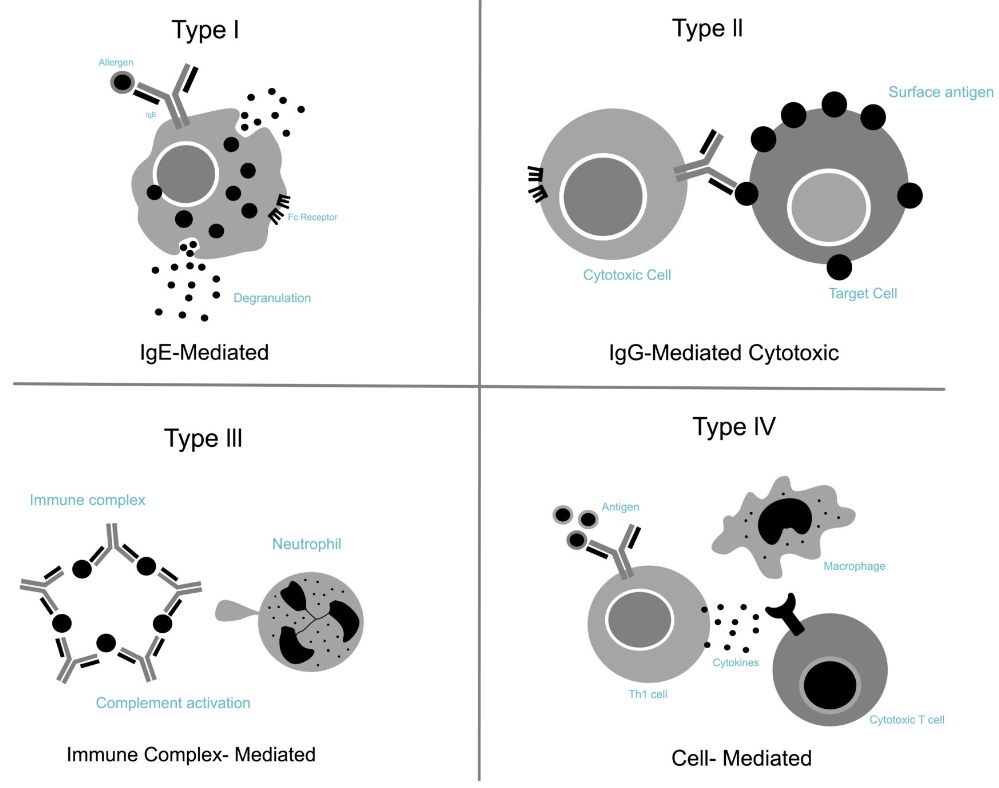
Antigen cross-links IgE on mast cells/basophils → histamine and mediator release → vasodilation, bronchospasm, oedema |
• Anaphylaxis (drugs, peanuts, insect stings) • Allergic rhinitis • Asthma • Urticaria, angioedema |
|
Type II – Cytotoxic |
IgG or IgM |
Antibody binds cell surface antigen → complement activation or ADCC → cell destruction |
• Mismatched blood transfusion • Haemolytic disease of the newborn (Rh) • Autoimmune haemolytic anaemia • Goodpasture’s syndrome |
|
Type III – Immune Complex-Mediated |
IgG immune complexes |
Circulating antigen–antibody complexes deposit in tissues → complement activation → inflammation |
• Post-streptococcal glomerulonephritis • SLE • Rheumatoid arthritis • Serum sickness |
|
Type IV – Delayed (Cell-Mediated) |
T lymphocytes (CD4⁺/CD8⁺) |
Sensitised T cells release cytokines → macrophage activation and tissue damage (48–72 hrs) |
• Contact dermatitis • Mantoux test • Type 1 diabetes mellitus • Transplant rejection |
Recall
- Type I → IgE → Allergy / Anaphylaxis
- Type II → IgG/IgM → Cytotoxic (e.g. transfusion reaction)
- Type III → Immune complex deposition → Vasculitis / GN
- Type IV → T-cell mediated → Delayed (48–72 hours)